
Maximum Rated Working Pressure
The maximum pressure that the hose should be subjected to on a continuous basis. OmegaFlex establishes this rating by multiplying the nominal rated burst pressure by 25%. Published pressure is calculated at 70°F.
Maximum Rated Test Pressure
The maximum pressure the hose should be subjected to during proof pressure or system testing. Hose corrugation deformation will occur if the maximum rated test pressure is exceeded. The maximum rated working pressure is multiplied by 150% to determine the maximum rated test pressure.
Nominal Rated Burst Pressure
The average pressure at which the core or braid will rupture at ambient temperature. Proper hose assembly fabrication techniques must be used to ensure the hose will meet OmegaFlex published pressures.
Pulsating or Shock Pressure
The performance of metal hose can be greatly reduced under this type of working pressure. Pressures are normally reduced by 50% in pulsating or shock pressure applications.
Contact OmegaFlex for additional information on this application.
Pressure/Temperature Correction
Metal hose pressure capabilities decrease as the temperature increases. Consult the temperature correction factor table to determine pressure rating at elevated temperatures.
Safety Factors
The maximum working pressure should not be greater than 25% of the nominal rated burst pressure after correcting for the application temperature. The safety factor is generally expressed as a ratio of 4:1.
Pressure Drop
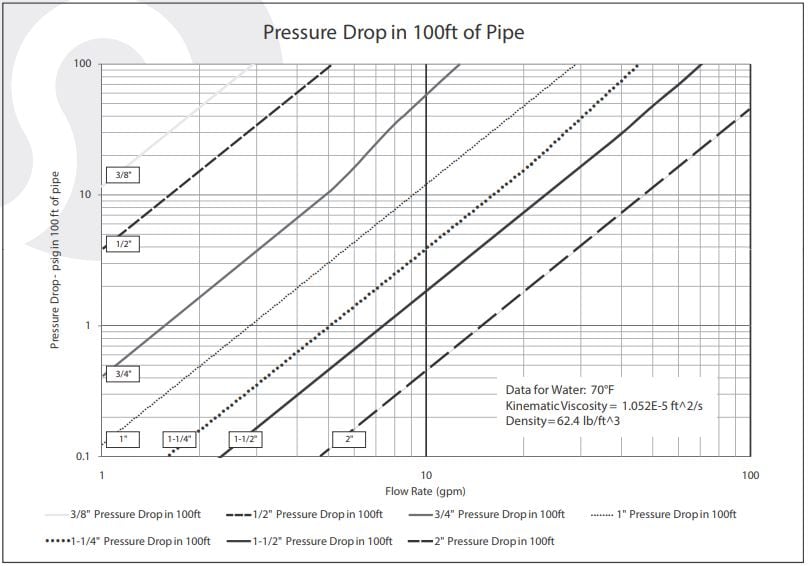
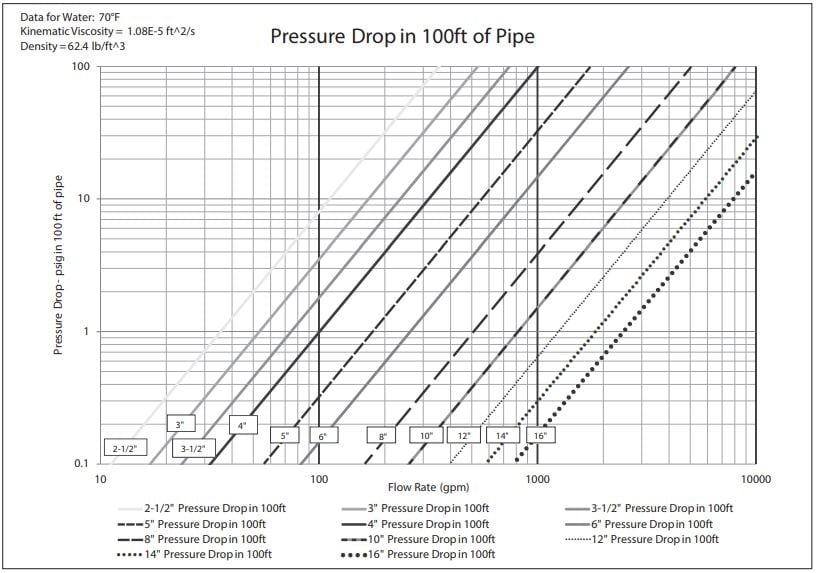
Pressure drop occurs in long hose runs. The amount of pressure loss is approximately 3 times that of steel pipe. Contact OmegaFlex if more accurate calculations are required.
View Pressure Drop in 100ft of Pipe Diagram